Pinpoint leak location
We trace the leak with acoustic listening, thermal imaging and line pressure tests before anything is opened.
We find the leaking pipe first, then repair it. Laurel, MD Leak Detection locates leaks in supply pipes and main water lines with non-invasive equipment, so the repair opening is small and targeted, not exploratory. After the fix, we pressure-test the line to confirm it holds.
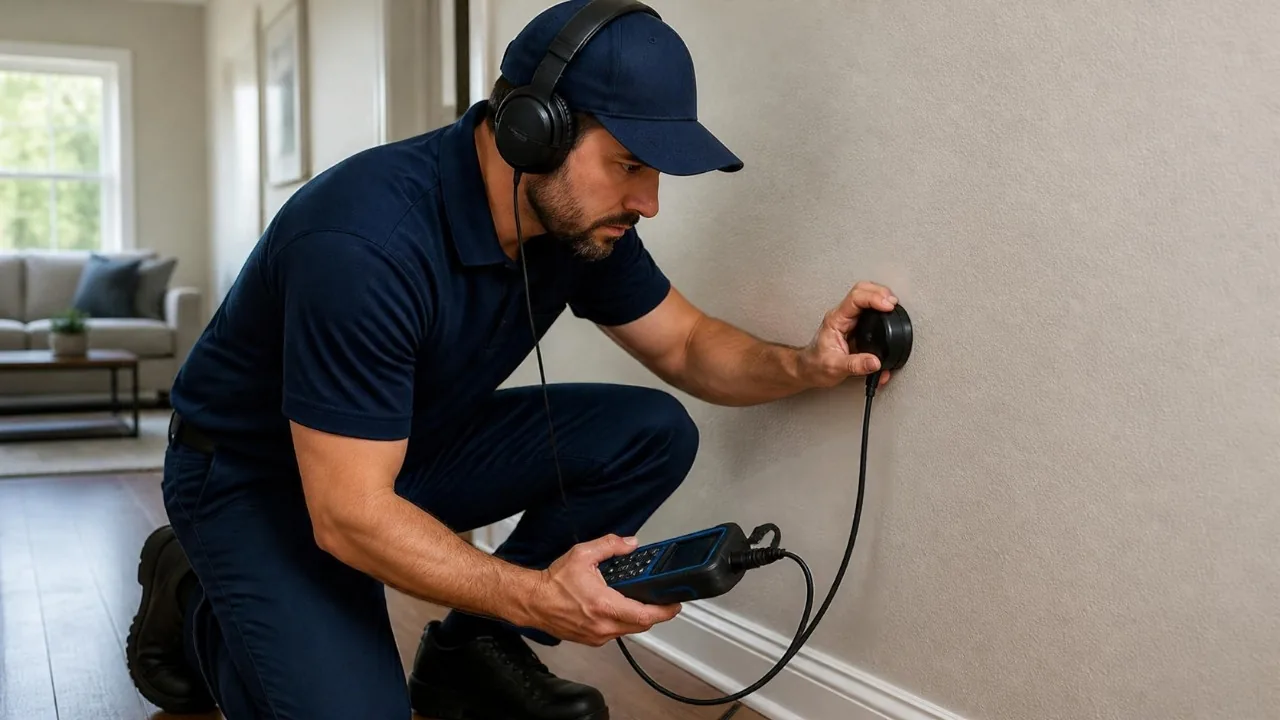
Most pipe leaks are hidden: inside a wall, under a slab, or along the buried line between the meter and your house. Guessing at the location means opening the wrong wall or digging the wrong part of the yard. We pinpoint the leak first with acoustic listening, thermal imaging and pressure testing, the same methods used in our water leak detection service, and only then plan the repair.
That order matters for cost and for your home. A precise location means a smaller access point, less drywall, flooring or landscaping to restore, and a repair aimed at the failed section of pipe.
Every job follows the same four steps, from locating the leak to proving the repair holds.
We trace the leak with acoustic listening, thermal imaging and line pressure tests before anything is opened.
You see what failed, where it is and the repair options, and you approve the plan before the repair begins.
We open only the area over the leak and replace the failed pipe section or fitting, or re-route the run when that is the more reliable fix.
The repaired line is pressure-tested to confirm it holds before the opening is closed.
Leaks show up differently depending on where the pipe runs and what it is made of.
The buried line from the water meter to your house. Leaks often show as soggy patches in the yard, low water pressure or a water bill that keeps climbing. See underground pipe leak detection.
Supply lines running beneath a concrete slab. Warm spots on the floor and the sound of running water are typical signs. See slab leak detection and repair.
Stains, bubbling paint, musty odor or a damp baseboard usually point to a leaking supply line or fitting inside a wall cavity.
Older galvanized steel tends to corrode from the inside, copper can develop pinhole leaks, and plastic lines usually fail at fittings. The pipe material shapes the repair.
The right repair depends on the pipe's condition, not only on the leak itself.
When one section or joint has failed and the rest of the pipe is sound, the damaged piece is cut out and replaced.
When a line has several leaks or sits under a slab, running a new line along a different path can avoid breaking concrete again.
A leak on the buried service line is exposed at the pinpointed spot and repaired, so the whole yard isn't trenched.
If the pipe near the leak is badly corroded, we tell you, so you can decide before the next leak happens.
Call when you notice any of these, especially more than one at a time.
Higher usage with no change in habits is one of the first signs of a hidden supply leak.
Turn off every fixture and watch the meter. If the dial still moves, water is escaping somewhere.
Moisture on walls, ceilings, floors or in the yard usually sits close to the leak.
Hissing or running water when nothing is on often comes from a pressurized supply line.
We give you a clear repair plan before work starts. These factors change the scope of a repair.
A leak behind an open basement wall is simpler to reach than one under a slab or a driveway.
A single failed fitting is a smaller job than a corroded run that needs re-routing.
The size of the opening, and the drywall, flooring or landscaping to restore afterward.
Standing water or wet materials may need drying before the area is closed up.
Both. We locate the leak first with non-invasive equipment, explain what we found and the repair options, and once you approve, we repair the pipe and pressure-test the line to confirm it holds.
Only where the leak is. Because the leak is pinpointed before any repair starts, access is limited to a small, targeted opening instead of exploratory demolition across the house or yard.
Often, yes. A single failed section or fitting can usually be cut out and replaced. When a pipe has several leaks or widespread corrosion, re-routing or replacing that run is usually the more reliable fix, and we explain why before any work.
Shut off the main water valve to stop the flow, turn off the water heater if the leak is on a hot-water line, move valuables away from the wet area, and photograph the damage for your insurance claim.
It depends on your policy. Many policies cover sudden water damage to the home but not the cost of repairing a worn or corroded pipe. Check your policy or call your insurer; we can document what we find for your claim.
Shut off the main water valve, then call. We locate the leak, explain the repair and fix it.
Call +13018727888 →Reach out for reliable leak detection services in Laurel, MD. We respond quickly to inquiries and are available 24/7 for emergencies.