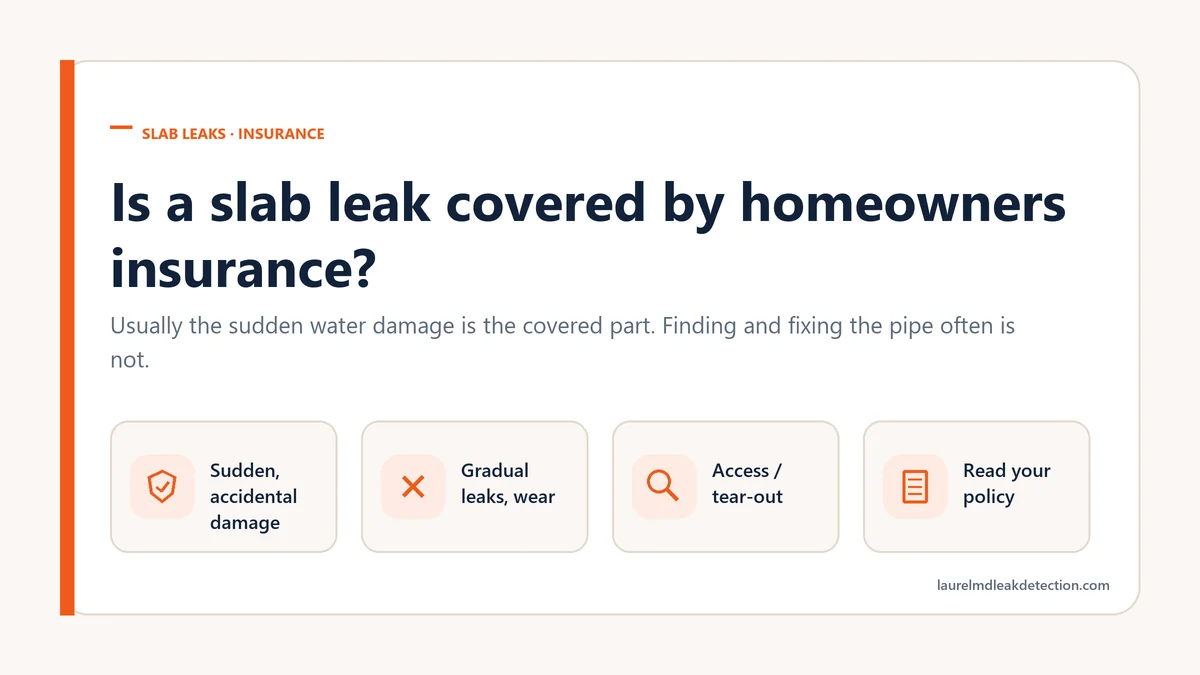
Homeowners insurance often covers the sudden, accidental water damage a slab leak causes, such as ruined flooring, drywall and cabinets, but it usually does not pay to replace the worn or corroded pipe, and it often excludes damage from a slow leak that ran for weeks or months. Some policies also pay to break into the slab to reach the pipe. The exact answer is in your policy, so read it, or call your insurer, before repairs start. If you think you have a slab leak in Laurel, MD, getting it pinpointed with slab leak detection first gives you the facts a claim needs.
This guide explains how policies usually split a slab leak claim, why claims get denied, and the steps to take in the right order.
This article is general information, not insurance or legal advice. Coverage depends on your policy, your insurer and the facts of the loss.
What part of a slab leak does insurance usually cover?
Insurers usually look at three separate costs, and each one can be treated differently:
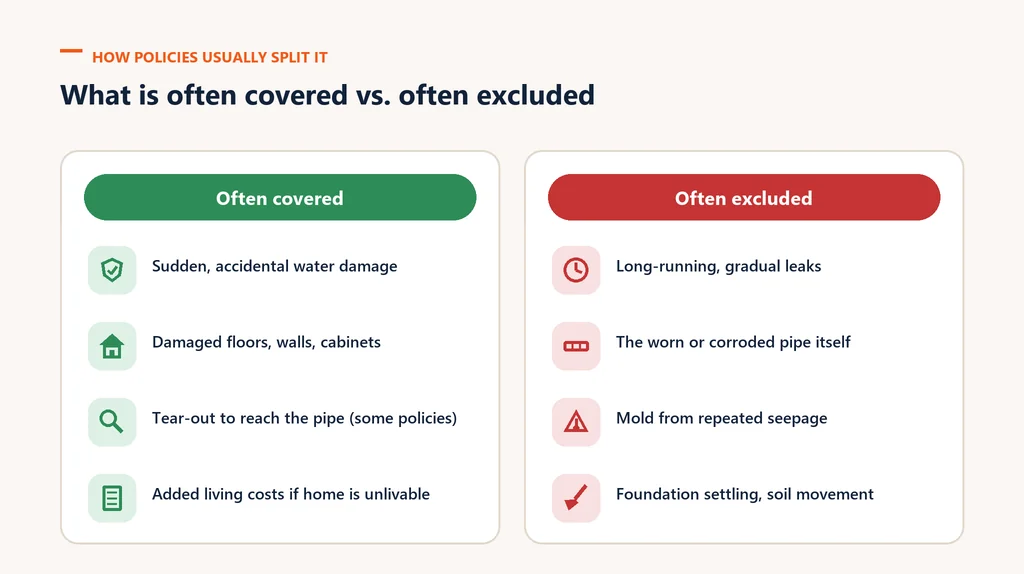
- The resulting water damage. Damage to floors, walls, cabinets and belongings caused by a sudden, accidental leak is the part most likely to be covered, because standard policies are built around sudden and accidental losses.
- Access to the pipe ("tear-out"). Some policies pay to break and restore the slab or flooring needed to reach the leak when the resulting damage is covered. Others do not. This line in the policy matters a lot for slab leaks, because the pipe is under concrete.
- The pipe itself. The cost to repair or replace the leaking pipe is commonly excluded as wear, deterioration or maintenance, even when the damage it caused is covered.
Sudden vs. gradual: the distinction that decides most claims
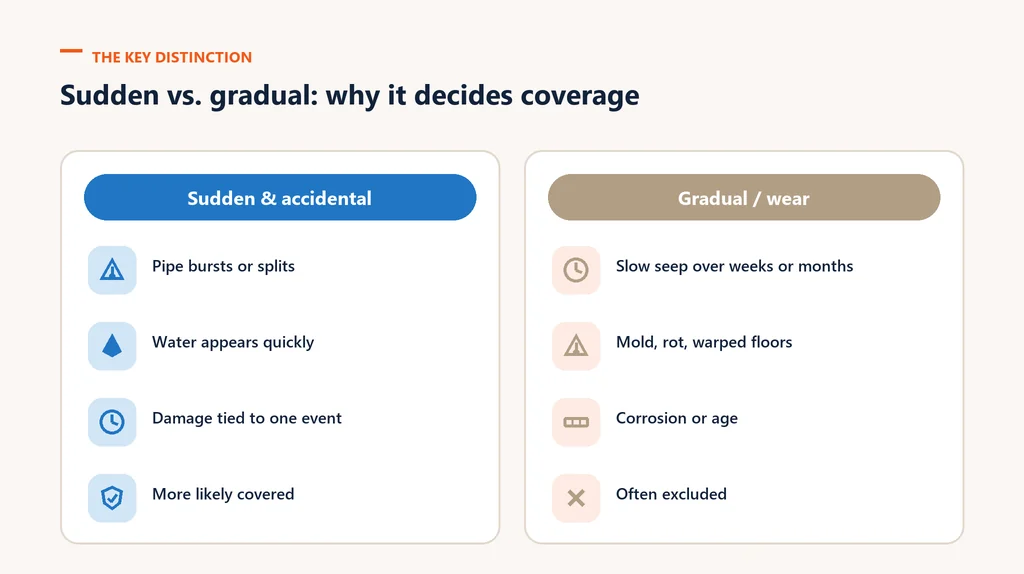
The biggest question in a slab leak claim is whether the leak was sudden and accidental or gradual. A pipe that splits and floods a room is sudden. A pinhole leak that seeped under the slab for months, slowly warping flooring and feeding mold, is gradual.
The Maryland Insurance Administration's guidance, as presented in its water damage materials, is direct: if you have a slow leak, regardless of when you discover it, most homeowners policies will not cover the damage that results (Maryland Insurance Administration, Water Damage webinar). Washington State's insurance regulator says the same about gradual leaks, even ones the homeowner had no way of knowing about (Washington Office of the Insurance Commissioner).
That is why acting on the early signs matters. Slab leaks are hidden under concrete, so they are often found late. The sooner the leak is confirmed and documented, the clearer the timeline. For the early signs, see what is a slab leak?
Why slab leak claims get denied
- Gradual leakage or seepage over an extended period.
- Wear and tear, corrosion or deterioration of the pipe.
- Mold, rot or fungus from repeated moisture, often limited or excluded.
- Settling, cracking or soil movement under the foundation.
- Neglect, such as ignoring a known leak or failing to stop the water.
- Flood or groundwater, which standard policies treat separately from plumbing leaks.
Does insurance pay for slab leak detection?
Sometimes. Some policies treat locating the leak as part of a covered water-damage claim; many do not. Either way, a written detection report that names the location, the method used and the likely cause helps the adjuster understand the loss, and it keeps any opening in the slab as small as possible. See how professionals find hidden water leaks for the methods used.
Questions to ask your insurer before repairs start
A short call before work begins can prevent a dispute later. Ask:
- Does my policy cover sudden water damage from a plumbing leak, and is there a separate limit for water damage?
- Does it pay for access, meaning breaking and restoring the slab or flooring to reach the pipe?
- Is the pipe repair itself covered, or excluded as wear and tear?
- Is leak detection covered as part of the claim?
- Do you want an adjuster to inspect before any tear-out or repair?
- What is my deductible, and do I have mold or water backup endorsements?
Write down the answers, the name of the person you spoke with and the date, and keep them with your photos and receipts.
How to file a slab leak claim, step by step
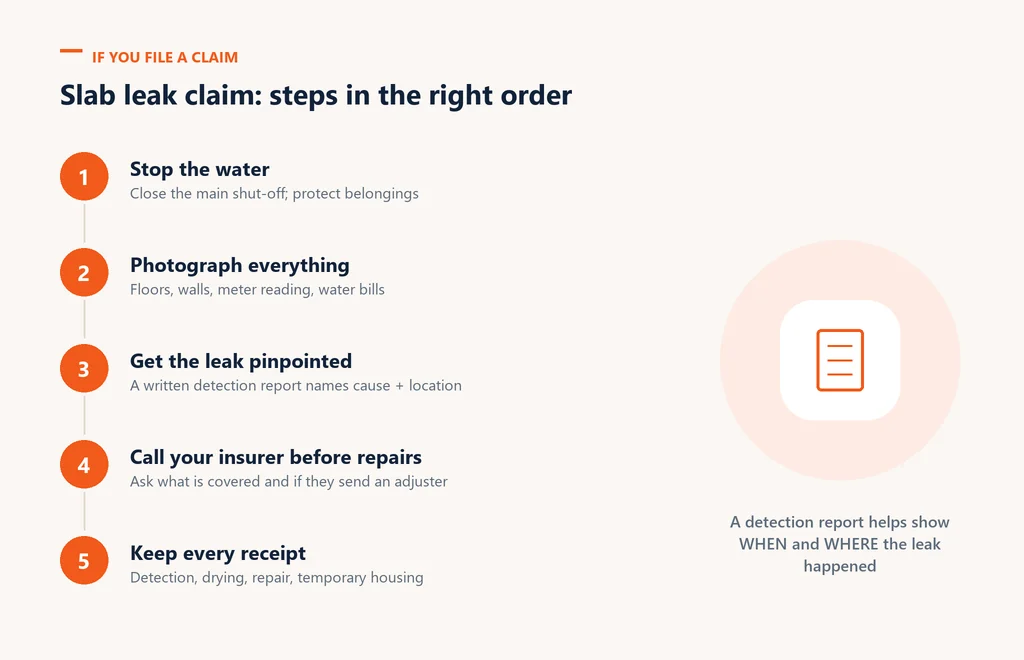
- Stop the water. Close the main shut-off valve and, if a hot line may be leaking, turn off the water heater following its instructions. Insurers generally expect you to prevent further damage.
- Document everything. Photograph damaged floors and walls, wet areas, the water meter reading and recent water bills.
- Get the leak pinpointed. A detection report gives the claim facts instead of guesses.
- Call your insurer before major repairs or tear-out. Ask what the policy covers for water damage, access and the pipe, and whether an adjuster will inspect first.
- Keep every receipt for detection, water extraction and drying, repairs and any temporary housing.
- If you disagree with a decision, ask the insurer to explain it in writing. Maryland residents can contact the Maryland Insurance Administration with questions or complaints.
Does the repair method affect the claim?
It can affect cost. Re-routing a new line through walls or the ceiling avoids breaking the slab, while a spot repair opens the concrete directly over the leak. Which one is right depends on the pipe, its condition and where the leak is. Ask your insurer how each option is treated before you choose. Our pipe and water line leak repair page explains the options.
What to do now
If you see slab leak signs, such as a warm floor spot, a rising bill or a meter that moves with all water off, act early. Call us at (301) 872-7888 to schedule slab leak detection in Laurel, MD, and keep the report for your insurer.
Related reading
- Slab leak detection and repair in Laurel, MD
- What is a slab leak? Signs, causes and what to do
- Pipe and water line leak repair
- 7 signs of a hidden water leak
We serve Laurel, MD and nearby neighborhoods, including Downtown Laurel, Laurel Lakes and Muirkirk.