The most common sign of a natural gas leak is a rotten-egg or sulfur smell, because utilities add an odorant called mercaptan to gas that is naturally odorless. Other signs are a hissing or whistling sound near a gas line or appliance, dead or dying grass over a buried line, and bubbles in standing water. People may feel a headache, dizziness, nausea or fatigue. If you notice any of these, leave the building now and call 911 or your gas utility from outside. Once the area is safe, our gas leak detection service in Laurel, MD can help trace the source.
This guide lists the signs and symptoms, the steps to take in order, and what happens after responders clear the home.
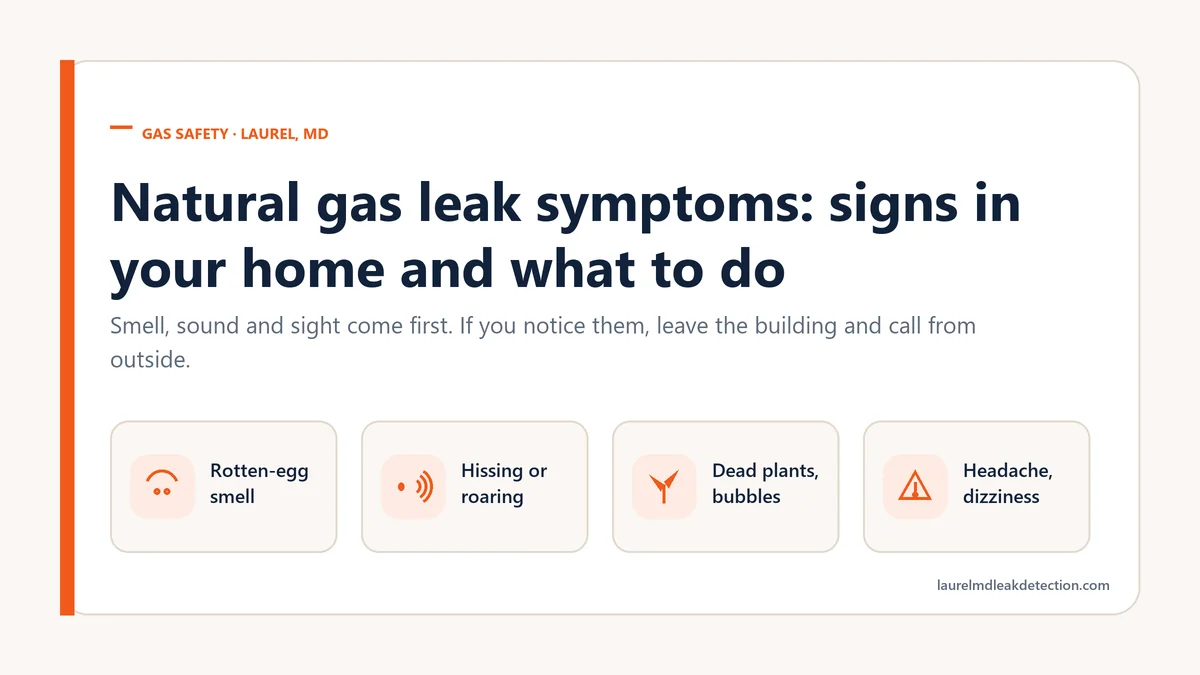
Smell gas right now? Stop reading. Leave the building, leave the door open, and call 911 or your gas utility once you are outside and well away from the house.
Signs of a natural gas leak: smell, sound and sight
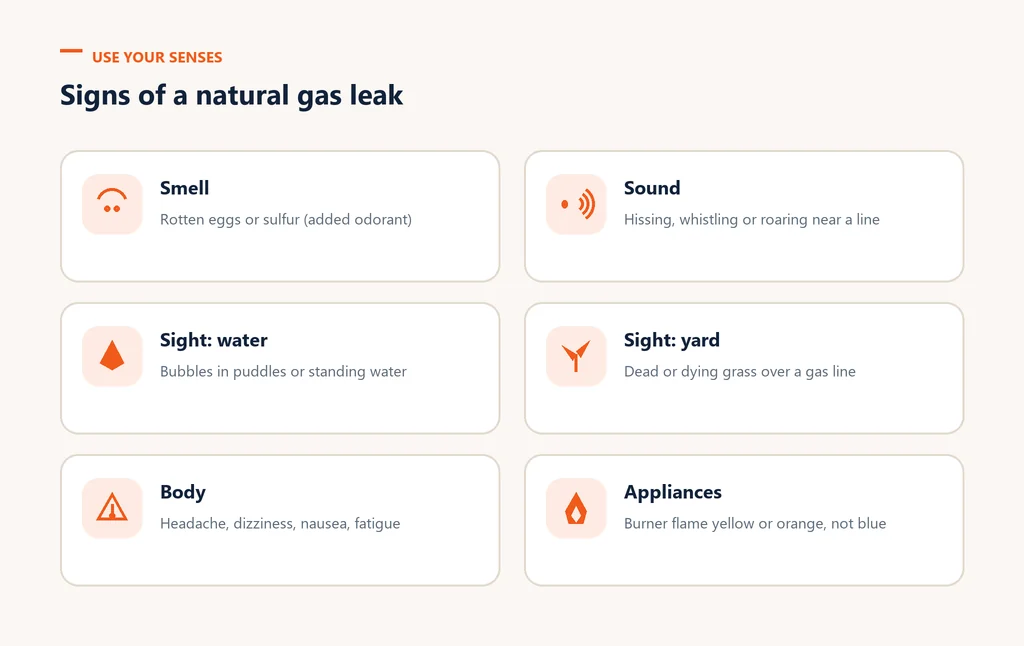
- Smell: rotten eggs or sulfur. Natural gas is mostly methane and has no smell of its own; the odorant is added so leaks can be noticed (Poison Control).
- Sound: hissing, whistling or roaring near a gas meter, a gas line or an appliance connection.
- Sight, outdoors: bubbling in puddles or standing water, blowing dirt or dust, and dead or dying grass or plants over a buried gas line.
- Sight, indoors: a damaged gas line or connector, or houseplants that wilt for no reason.
- Appliances: a burner flame that is yellow or orange instead of mostly blue can mean poor combustion and should be checked by a qualified technician.
Physical symptoms of a gas leak
Natural gas can displace the oxygen in a closed space. Symptoms reported with gas exposure include:
- Headache
- Dizziness or lightheadedness
- Nausea
- Fatigue or drowsiness
- Shortness of breath
- Irritation of the eyes or throat
Pets may become unusually tired or have trouble breathing. Symptoms that ease when you go outside and return when you come back in are a warning sign. Get fresh air first, then call. If anyone has severe symptoms, call 911.
What to do if you smell gas
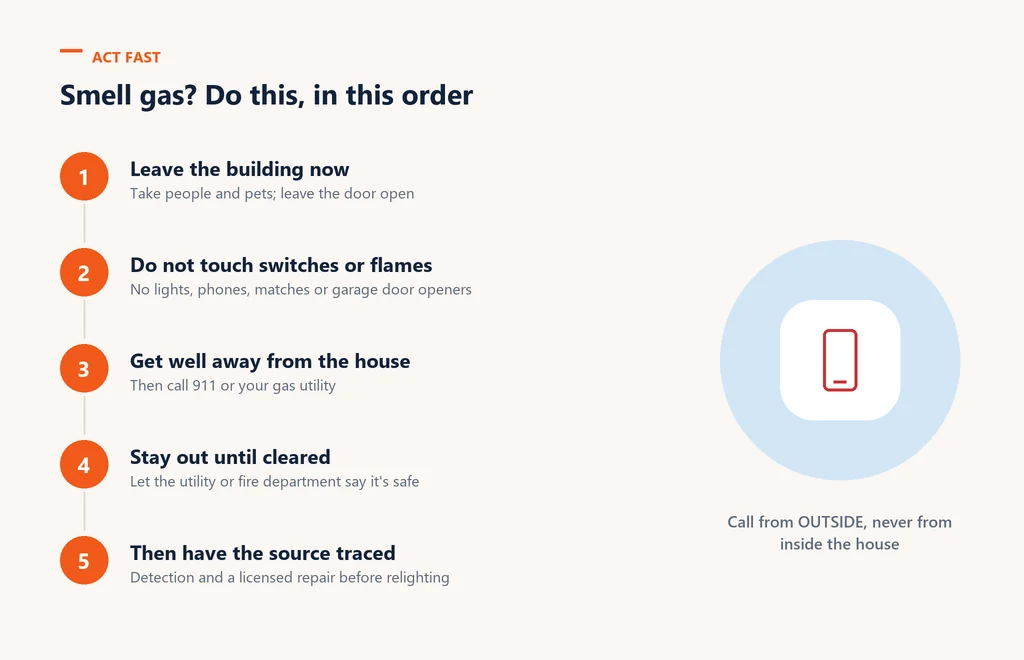
- Leave the building right away. Take everyone, including pets. Leave the door open behind you.
- Do not create a spark. Do not switch lights or appliances on or off, use a phone or doorbell inside, light a match or lighter, or start a car in an attached garage.
- Call from a safe distance. Once you are well away from the building, call 911 or your gas utility's emergency line. BGE serves much of the Laurel area; the right emergency number for your address is on your gas bill and your utility's website.
- Stay out until it is declared safe. Let the utility or the fire department confirm it is safe to go back in.
- Then have the source traced and repaired. A qualified technician locates the leak, and a licensed professional makes the repair before appliances are relit.
Why you should not look for the leak yourself
Walking through the house to find the smell, opening cabinets, or turning an appliance off can create a spark in an area where gas has collected. Gas can also gather in basements, crawl spaces and enclosed rooms, which makes it hard to judge how much is present. The safest choice is always to leave and let trained responders investigate.
Natural gas leak vs. carbon monoxide
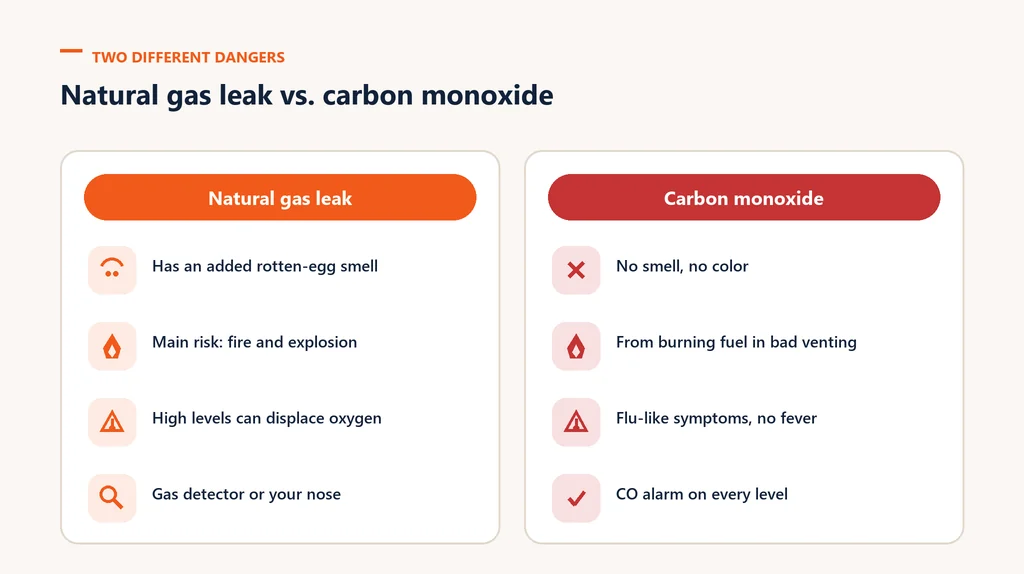
A gas leak and carbon monoxide (CO) are different problems. Leaking natural gas has the added rotten-egg smell, and its main danger is fire or explosion. Carbon monoxide is produced when fuel burns, for example in a furnace or water heater that is not venting properly, and it has no smell. Its symptoms are often flu-like without a fever. A gas detector can warn of leaking gas, but only a CO alarm warns of carbon monoxide, so homes with gas appliances should have both.
Smells that can be mistaken for natural gas
A few household problems also smell like sulfur or rotten eggs:
- Sewer gas from a dry floor drain or an unused sink or shower, where the water in the trap has evaporated.
- A water heater producing a rotten-egg smell in the hot water only.
- Spoiled food, or a dead animal in a wall, attic or crawl space.
You cannot safely tell these apart by smell. If you are not sure, treat it as gas: leave and call. Responders would much rather check a false alarm than miss a real leak.
Common causes of gas leaks at home
- Loose, worn or damaged connections at a range, dryer, water heater or furnace.
- Corroded or damaged gas piping in a basement, crawl space or wall.
- Damage to a buried gas line during digging or landscaping. Maryland's one-call service, Miss Utility, should be contacted before digging.
- A problem at the meter or regulator outside the home, which belongs to the utility.
What happens after the area is safe
After the utility or fire department has made the area safe, the next step is finding exactly where gas escaped. A technician checks appliance connections and accessible piping with a gas detector and documents the location, so the licensed repair is targeted. We describe this on our gas leak detection page. For related water problems, see 7 signs of a hidden water leak.
How to lower the risk
- Have gas appliances and their connections inspected regularly by a qualified technician.
- Install CO alarms near sleeping areas and on every level of the home.
- Know where the gas meter is, and save your utility's emergency number in your phone.
- Call Miss Utility before any digging in the yard.
For non-emergency questions about gas leak detection in Laurel, MD, call (301) 872-7888. If you smell gas, leave and call 911 or your utility first.
Related reading
- Gas leak detection in Laurel, MD
- 7 signs of a hidden water leak
- How do professionals find hidden leaks?
- All leak detection services
We serve Laurel, MD and nearby neighborhoods, including Downtown Laurel, Laurel Lakes and Muirkirk.